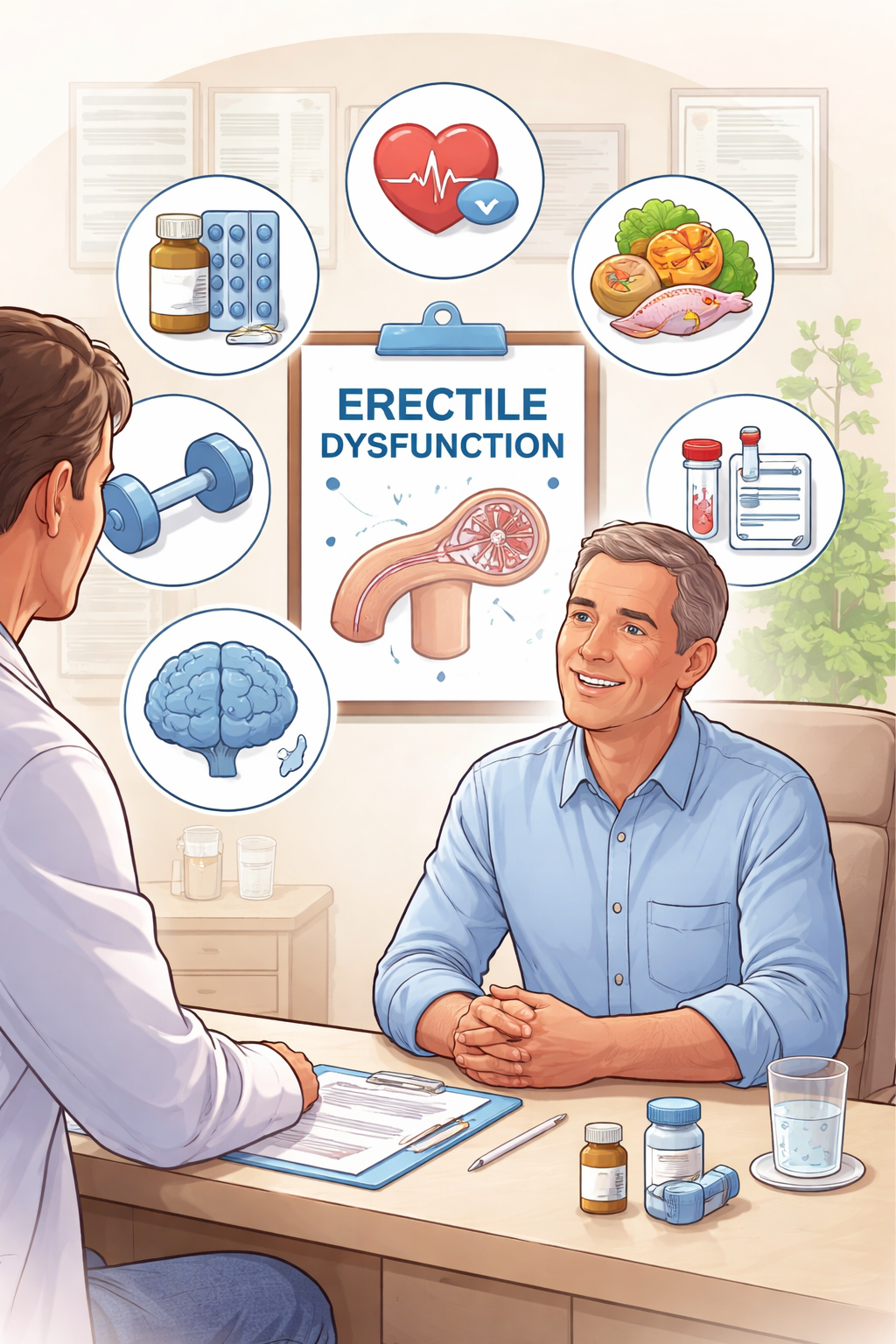
Dealing with erection problems can feel uncomfortable to talk about, but understanding the treatments for erectile dysfunction makes the situation far less intimidating. Most men are surprised to learn that treatment is not rushed, awkward, or one size fits all. It usually follows a clear step by step process that focuses on health, comfort, and realistic results rather than pressure or quick fixes.
Understanding Erectile Dysfunction Without the Stigma
Erectile dysfunction, often called ED, happens when achieving or maintaining an erection becomes difficult on a regular basis. It can be linked to blood flow issues, hormone changes, nerve signals, stress, anxiety, or a mix of physical and psychological factors. Age can play a role, but ED is not just an aging issue. Younger men experience it too, often due to stress, lifestyle habits, or underlying health conditions.
The important thing to know is that ED is common and treatable. Many men wait far too long to seek help because they assume nothing can be done or that treatment will be embarrassing. In reality, most clinics approach ED with professionalism and discretion.
The First Consultation, What Actually Happens
The first step in treatments for erectile dysfunction is a consultation. This is usually a conversation rather than an examination heavy appointment. The provider will ask about symptoms, how long the issue has been present, and whether erections occur at any time, such as during sleep or in the morning.
You may also be asked about:
- Medical history, including diabetes, heart conditions, or high blood pressure
- Current medications
- Lifestyle habits like smoking, alcohol use, exercise, and sleep
- Stress levels and mental health factors
This stage helps identify whether ED is more likely physical, psychological, or a combination of both. Many men find relief simply by having an open discussion without judgment.
Assessment and Testing
After the initial discussion, basic assessments may follow. These are not always required, but they help guide treatment choices.
Common assessments include:
- Blood tests to check testosterone and other hormone levels
- Blood sugar and cholesterol tests
- Blood pressure checks
- In some cases, ultrasound to assess blood flow
Not every patient needs every test. The goal is clarity, not over testing. The results help rule out serious conditions and ensure that treatments for erectile dysfunction are safe and appropriate.
Lifestyle Changes as a Foundation
Before jumping into medication or procedures, many providers address lifestyle factors. This step is often overlooked but can make a major difference.
Lifestyle adjustments may include:
- Improving diet to support blood flow and heart health
- Increasing physical activity
- Reducing alcohol intake
- Quitting smoking
- Improving sleep quality
- Managing stress and anxiety
For some men, these changes alone significantly improve erectile function. Even when additional treatment is needed, lifestyle improvements increase success rates.
Medication Based Options
Oral medications are among the most well known treatments for erectile dysfunction. These medications work by improving blood flow to the penis when sexual stimulation occurs. They are not instant fixes and do not increase desire, but they help the body respond more effectively.
Medication options are chosen based on:
- Overall health
- Other medications being taken
- Frequency of sexual activity
- Side effect tolerance
The provider will explain how and when to take the medication, what to expect, and what is normal versus what should be reported.
Non Oral Therapies and Advanced Options
If oral medications are not effective or not suitable, other treatments are available. These options are often misunderstood but are widely used and effective.
Non oral treatments may include:
- Injection therapy, which delivers medication directly where it is needed
- Vacuum erection devices that improve blood flow mechanically
- Hormone therapy if low testosterone is a contributing factor
- Shockwave therapy in select cases to support blood vessel health
Each option is explained clearly so patients can make informed decisions without feeling pushed.
Addressing the Mental Side of ED
Psychological factors play a larger role in ED than many men realize. Performance anxiety, stress, depression, and relationship concerns can all interfere with erections, even when physical health is good.
In these cases, treatments for erectile dysfunction may include:
- Counseling or therapy
- Stress management techniques
- Open communication with a partner
- Combining psychological support with medical treatment
This approach often leads to more lasting results because it addresses the root cause rather than just the symptom.
Ongoing Follow Up and Adjustments
ED treatment is not a single appointment process. Follow up visits allow providers to adjust dosages, switch treatments, or combine approaches based on results and comfort level.
Follow up ensures that:
- The treatment is working as expected
- Side effects are managed
- Confidence improves over time
- Long term health factors are monitored
Many men notice gradual improvement rather than an overnight change, and that is completely normal.
What This Process Feels Like for Most Men
Most patients describe the experience as far less stressful than expected. Appointments are private, respectful, and focused on solutions. There is no pressure to choose a specific treatment, and no assumption that ED defines masculinity or worth.
For many, the biggest shift happens mentally, realizing that help exists and that improvement is possible. Treatment becomes part of overall health rather than a standalone issue, fitting naturally into daily life, conversations, and confidence, without needing to announce itself or demand attention.