Water problems rarely stay small. A slow leak, a flooded basement, or damp drywall can quietly turn into mold growth that affects air quality, structure, and health. That is why Water Damage Restoration needs to be handled early, carefully, and by people who understand how moisture behaves inside a building, not just on the surface.
In places like Toms River, where humidity and storms are common, water damage and mold often show up together. One feeds the other. Fixing only what you can see usually means the problem comes back.
How Water Damage Leads to Mold Problems
Water damage is not always dramatic. It does not have to involve standing water or soaked carpets. Mold often starts from small issues such as:
- Leaks behind walls or under sinks
- Poor ventilation in bathrooms or basements
- Roof damage that allows slow water intrusion
- Past flooding that was dried but not fully treated
Once moisture settles into drywall, wood, or insulation, mold spores find the perfect environment to grow. Many homeowners do not realize there is a problem until they notice odors, stains, or allergy-like symptoms.
This is where professional inspection matters. Finding mold early reduces damage and keeps restoration costs manageable.
The Importance of Professional Mold Testing
Mold is not always visible. In many homes, it grows behind walls, under flooring, or inside HVAC systems. Professional mold testing helps identify the presence, type, and extent of mold before it spreads further.
Experienced technicians use tools such as moisture meters, air sampling, and thermal imaging to locate hidden issues. Testing is not about guessing, it is about knowing exactly what you are dealing with and creating a targeted plan to remove it safely.
Accurate testing also helps property owners understand whether mold is active, dormant, or linked to ongoing water damage.
Safe and Effective Mold Removal Practices
Mold removal is not a simple cleanup job. Scrubbing surfaces or using store bought sprays can release spores into the air and make the situation worse. Proper mold remediation follows a controlled process that protects both occupants and the structure.
Key steps usually include:
- Containing affected areas to prevent cross contamination
- Using air filtration devices to capture airborne spores
- Removing contaminated materials that cannot be saved
- Cleaning and treating surfaces with appropriate methods
- Addressing the moisture source that caused the growth
Safety matters throughout the process. Protective equipment and proven techniques help ensure mold is removed without spreading it to other parts of the property.
Water Damage Restoration Goes Beyond Drying
Many people think water damage restoration ends once everything looks dry. In reality, drying is only one part of the process. True restoration focuses on making sure moisture is fully removed and cannot return.
Professional water damage restoration typically involves:
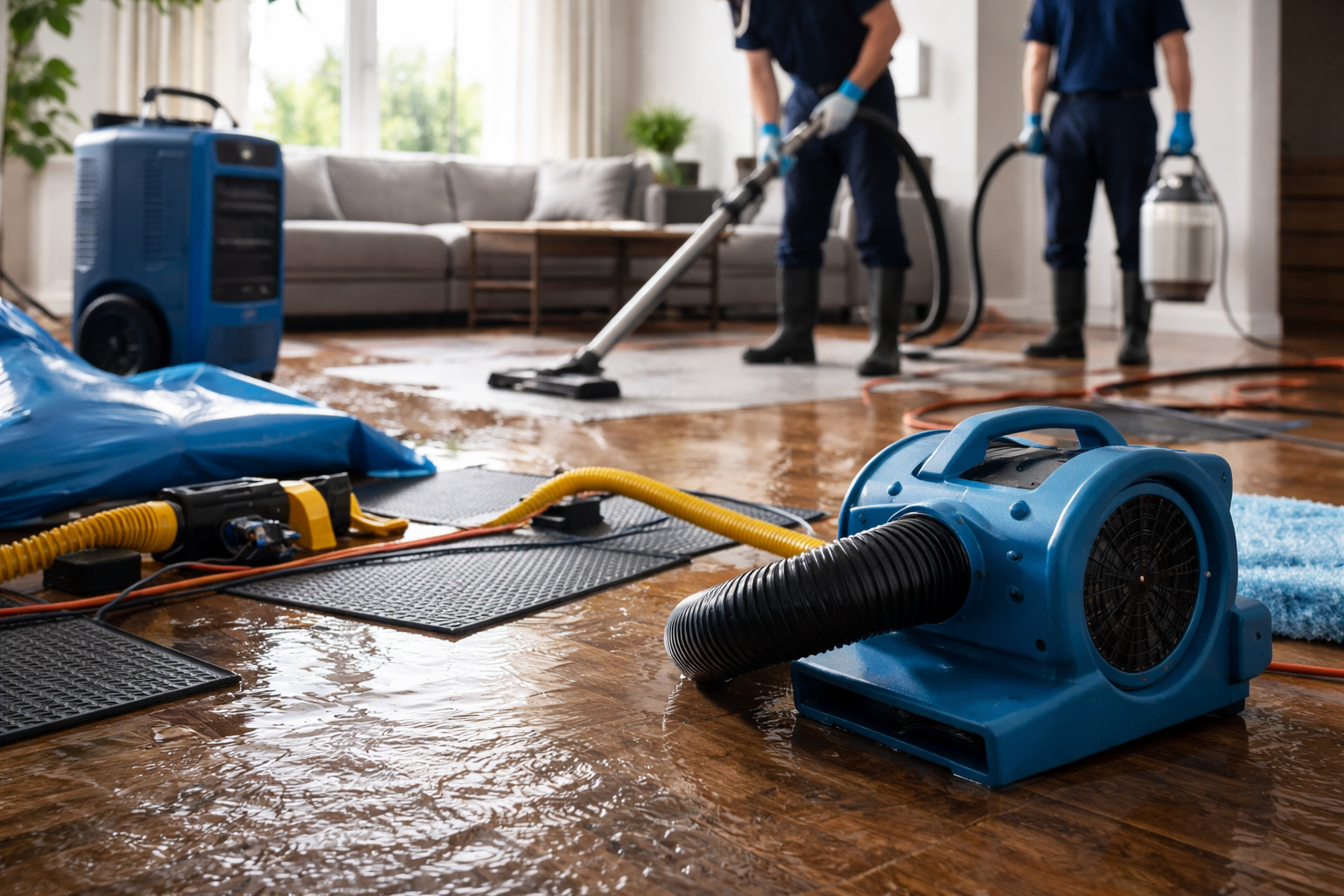
- Extracting water from affected areas
- Drying structures using commercial grade equipment
- Monitoring moisture levels until materials are stable
- Repairing or replacing damaged surfaces
- Preventing future water intrusion
Ignoring any of these steps can lead to recurring mold growth, odors, or structural problems over time.
Why Fast Response Makes a Big Difference
Time matters when dealing with water damage and mold. Mold can begin growing within 24 to 48 hours after moisture exposure. The longer water sits, the deeper it penetrates into building materials.
A fast response helps limit:
- The spread of mold to clean areas
- The need for extensive demolition
- Health risks linked to mold exposure
- Overall repair and restoration costs
Clear communication during this process also matters. Knowing what is happening in your home or business reduces stress and helps you make informed decisions.
Residential and Commercial Restoration Needs
Homes and commercial properties face different challenges when it comes to water damage and mold. A residential project may focus on living spaces, while a commercial property must consider business continuity, safety regulations, and larger systems.
Professional teams adjust their approach based on the property type, size, and use. Whether it is a family home, rental property, office, or retail space, the goal remains the same, restore a clean, healthy environment without unnecessary disruption.
Choosing the Right Restoration Team
Not all restoration services are the same. Experience, equipment, and attention to detail make a real difference in results. A reliable restoration team understands that every situation is unique and avoids one size fits all solutions.
Look for professionals who prioritize:
- Thorough inspections instead of quick assumptions
- Safe removal methods backed by experience
- Honest explanations of findings and options
- Fair pricing without hidden surprises
- Long term prevention, not temporary fixes
Water damage and mold issues are stressful enough without confusion or rushed decisions.
Protecting Your Space Long Term
Once restoration and remediation are complete, prevention becomes the next priority. Simple steps such as improving ventilation, repairing leaks promptly, and monitoring humidity levels can help keep mold from returning.
Regular inspections after past water damage also provide peace of mind. Moisture problems tend to repeat in the same areas if the root cause is not fully resolved.
A clean, dry environment supports healthier indoor air and protects the value of your property, one careful step at a time.